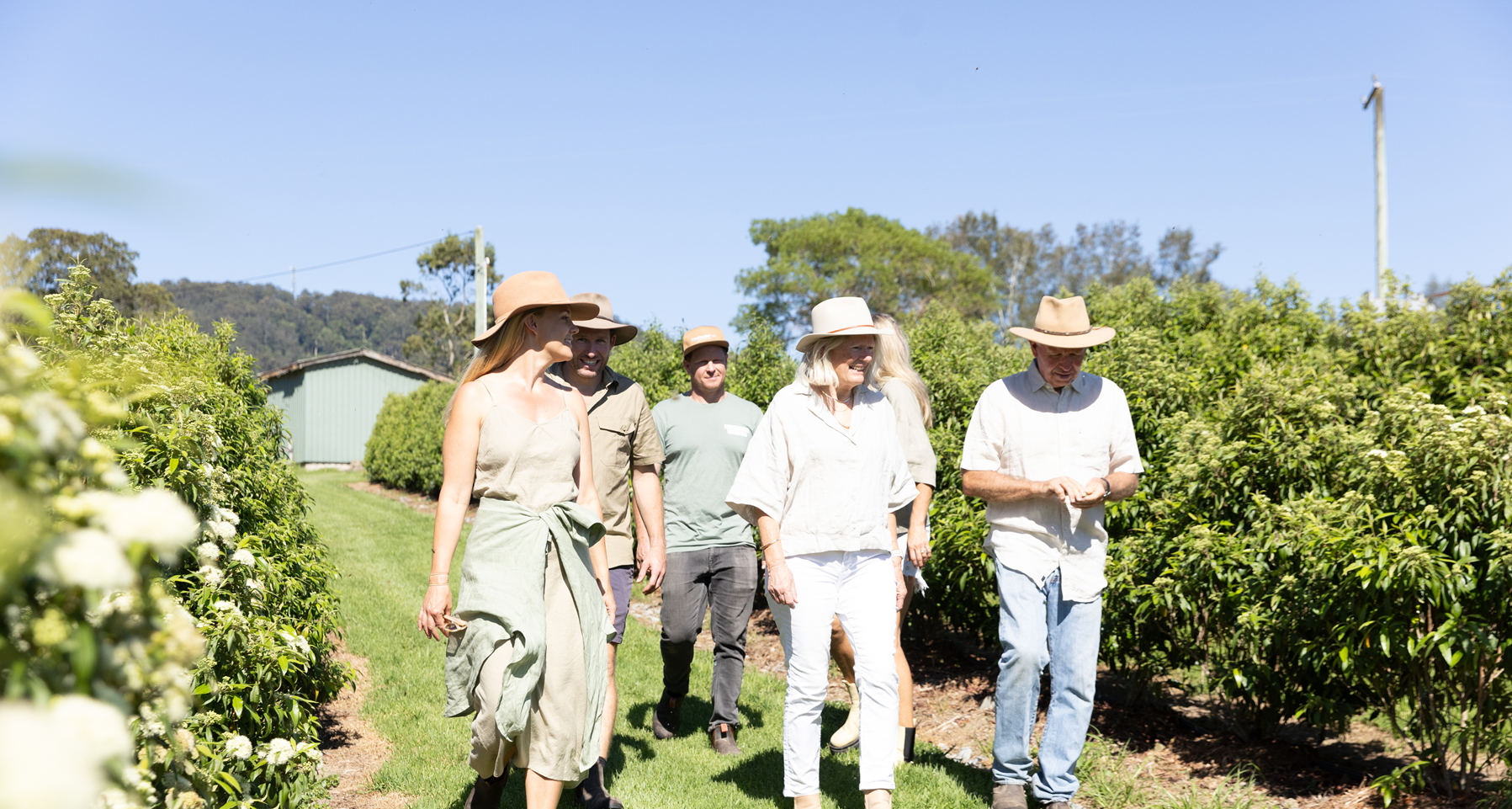


At Freshwater Farm, we take our commitment to sustainability seriously, which is why we are continuously improving our farming methods. A key part of this journey has been adopting regenerative agriculture practices to help us care for the land.
What is Regenerative Farming?
Regenerative farming is all about using forward-thinking practices that work with nature to restore and enrich the land. By nurturing the natural ecosystem, we’re able to improve soil health, build resilience in Australia’s harsh climates, and support the incredible biodiversity that call our farm home.
Unlike conventional farming, regenerative agriculture actively helps to reduce carbon emissions, combat the depletion of resources, and restore biodiversity – making it especially important here in Australia, where climate variability, soil degradation, and water scarcity are ongoing challenges.
It’s also one of the most accessible and effective climate solutions available to us, which is why regenerative agriculture plays such a central role in our commitment to caring for the environment.

How does Freshwater Farm practice Regenerative Farming?
1. Freshwater Farm is home to nearly 130 acres of native botanical plants, an area covering almost 100 football fields.
Australian tea tree, lemon myrtle, and lemon-scented tea tree are naturally adapted to local soils and climate, meaning they require fewer chemical inputs while enriching and supporting healthy, resilient soil.
By cultivating these native plant species, our farm has become a thriving haven for wildlife – in turn, the wildlife provides natural pest control, pollination, and nutrient cycling. This healthy ecosystem also sustains the bees that produce our manuka honey.
“Regenerative Farming is one of the best ways that we can protect the land.” - Al, Co-Founder

2. We protect 30 acres of untouched, wild tea tree.
Planted in the late 1990s, we house 30 acres of tea tree that we don’t harvest, allowing the trees to naturally capture and store carbon throughout their lifetime. This helps offset any emissions created during farming, manufacturing, or freight – keeping our brand carbon neutral.
We are also rewilding the surrounding areas by restoring the land with native plant species, which in turn helps local wildlife back to the habitat. Among these native species are Melaleuca quinquenervia (Broad-Leaf Paperbark), Casuarina cunninghamiana (River She-oak), and koala-friendly eucalyptus varieties of Swamp Mahogany and Tallowwood.

3. We are serious about our soil health.
We have worked tirelessly on the farm to improve the carbon in our soil. That carbon ensures the soil is healthy - it’s the organic matter that keeps the land fertile, helps it hold water through dry spells, and also means the carbon is locked into the ground instead of the atmosphere. Higher soil carbon makes the farm more productive and more climate-friendly, at the same time.
The way we do that is by nurturing a thriving community of soil microflora. These microscopic bacteria and fungi break down organic matter into plant-available nutrients, build better soil structure, and create a naturally disease-suppressive root zone. For over four years, we have collaborated with Neutrog Biological Fertilisers (a world leader in soil microbiology) to further strengthen that microflora on our farm.
In our lemon myrtle groves, we inoculate the soil four times a year, aligning this with each season to keep the biology active and balanced year-round. The inoculation is essentially adding helpful microorganisms to boost soil health, and it also helps crowd out Phytophthora, the root-rot disease lemon myrtle is particularly susceptible to. A diverse, well-established microbial community makes it much harder for Phytophthora to take hold in the soil. Alongside this, we support nitrogen-fixing bacteria and thousands of other beneficial bacteria, fungi, and archaea that work symbiotically with our plants, unlocking and delivering essential nutrients as the trees need them. Supporting this diverse microbial community is a key part of improving soil health and, in turn, the vitality of our crops.

4. We grow naturally low-tillage crops.
Low-tillage farming is a method of growing crops with minimal digging and soil disturbance. This protects the soil’s natural structure and improves its ability to absorb and hold water, helping our crops stay healthy through the dryer seasons.
All biomass, i.e. any plant material that is left over after harvesting and distillation, is returned to the soil as mulch, further supporting water retention, enriching organic matter, and restoring carbon to the soil. Overtime, this supports a self-sustaining soil ecosystem that requires even fewer external inputs over time.

5. We responsibly source all of our ingredients.
We extend our regenerative principles to anything we don’t grow ourselves, prioritising suppliers that protect their soil, water, and biodiversity to create a supply chain that actively restores the land, rather than exhausting it.

If you’d like to learn more about our sustainable farming journey, join our newsletter for Al's monthly farm stories and updates.